The Practical Fibromyalgia Diet: Managing Symptoms Without the Stress
You don’t need a perfect diet to feel better. Focus on anti-inflammatory foods (like berries and fish), keep hydration high, and try to minimize processed sugars. Start with one small change today—no stress required.
Why Diet Matters
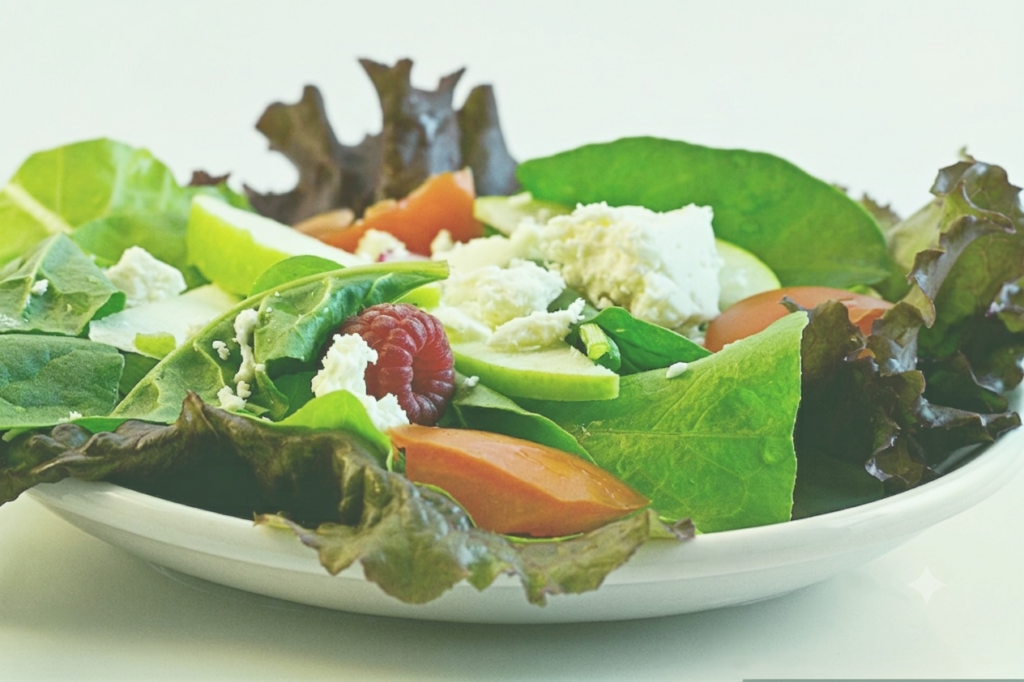
Food choices can influence inflammation, energy levels, and pain sensitivity. Many people notice that certain eating patterns help:
- Maintain stable energy (less “crashing”).
- Decrease bloating or digestive discomfort.
- Support better sleep and mood.
Nutrition isn’t a cure, but it is a powerful tool to use alongside gentle movement, stress reduction, and your prescribed therapies.
Foods to Include
Focus on nutrient-rich whole foods that help reduce inflammation and stabilize energy.
- Lean proteins: Skinless chicken, fish, eggs, tofu, or legumes – Helps repair your body.
- Fruits and vegetables: Aim for a variety of colors each day. Berries, leafy greens, and cruciferous vegetables are rich in antioxidants.
- Whole grains: Quinoa, oats, and brown rice can help maintain blood sugar stability.
- Healthy fats: Avocados, olive oil, nuts, seeds, and fatty fish help support an anti-inflammatory eating pattern.
- Hydration: Plain water, herbal teas, cucumber or lemon-infused water, or mineral-rich broths can help support overall wellness.
Simple daily plan example
- Breakfast: Oatmeal with berries and chia seeds.
- Lunch: Mixed greens with grilled salmon, olive oil, and lemon.
- Snack: Almonds or an apple with peanut butter.
- Dinner: Chicken stir-fry with vegetables and brown rice.
Foods and Additives to Consider Limiting
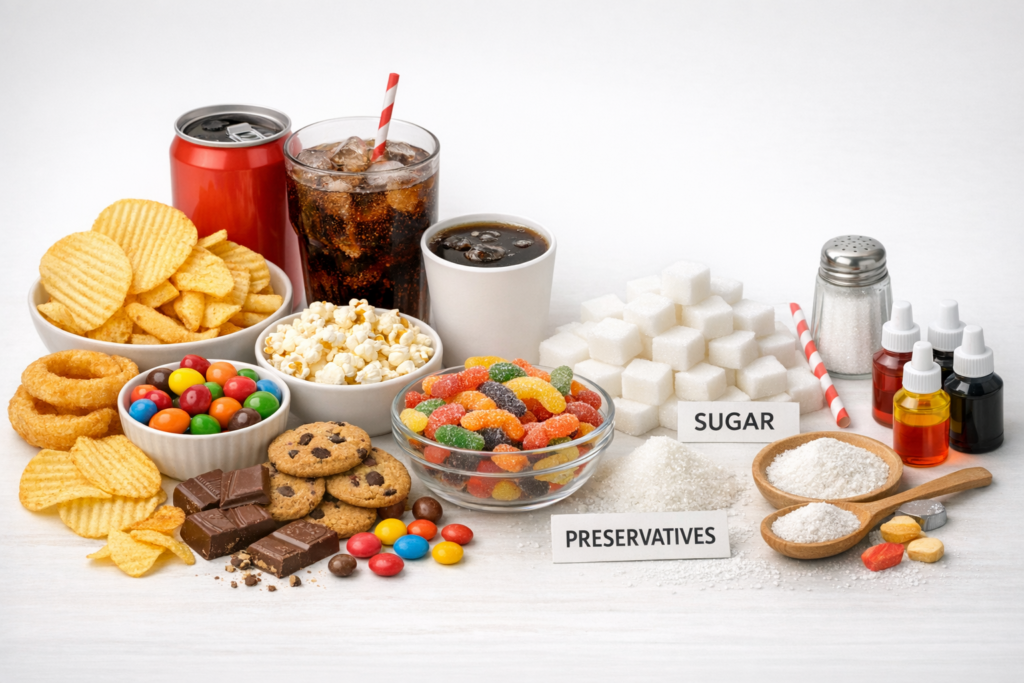
Some people notice fewer flares when reducing certain “pro-inflammatory” triggers:
- Processed Foods: Refined sugar, white flour, and fried foods.
- Artificial Sweeteners: Some (like aspartame) may increase sensitivity.
- Excess Caffeine or Alcohol: These can disrupt sleep-stress balance.
- MSG & Preservatives: Often found in packaged snacks—monitor your response.
Pro Tip: Keep a simple food journal to spot patterns rather than restricting too much at once.
How Diet Targets Specific Symptoms
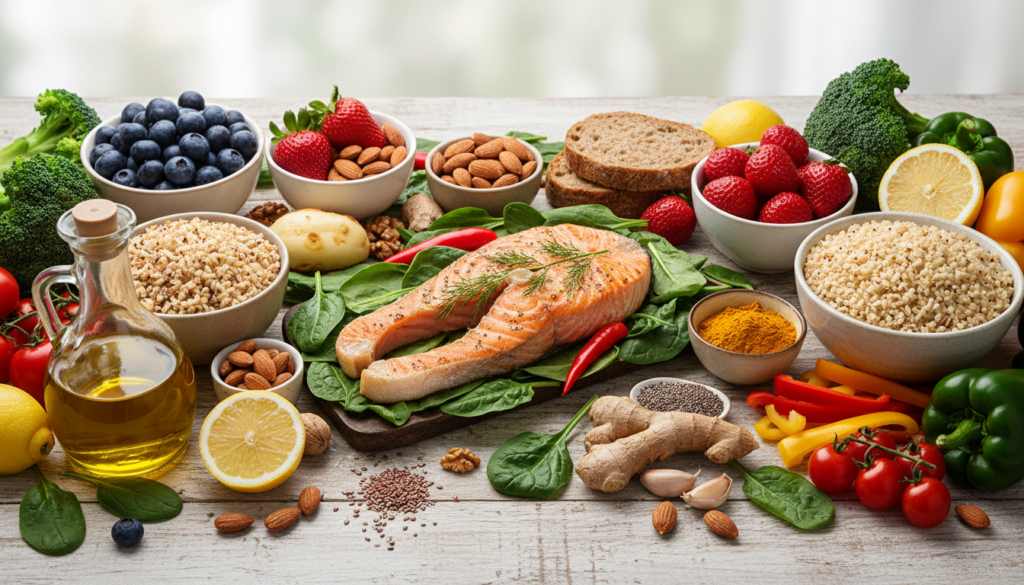
- Pain & Inflammation: Fatty fish (salmon), berries, and turmeric.
- Fatigue & Energy: Whole grains and lean proteins for steady fuel.
- Sleep & Recovery: Magnesium-rich foods (leafy greens, nuts).
- Brain Fog: Omega-3s (walnuts, flax) and antioxidant-rich produce.
Low-Energy Kitchen Tips
- Batch Cook: Prepare soups or roasted vegetables once a week.
- Use Frozen Produce: They are just as nutritious and require zero chopping.
- The “Rotisserie” Shortcut: Pre-washed greens and store-bought rotisserie chicken are lifesavers.
Key Takeaways for Success
- Test What Works: Use a journal to see how your body responds to changes.
- Talk to Pros: Discuss any new supplements with your clinician or dietitian.
- Be Kind to Yourself: Movement and diet are tools, not tests.
Resources and Further Reading
Important Disclaimer: This is general educational information, not medical advice. Always consult your healthcare provider before making dietary changes or starting supplements.
Learn more about gentle ways to support fibromyalgia relief, daily comfort, and overall, well‑being.
Gentle options to support sleep and daily comfort.
As an Amazon Associate, I earn from qualifying purchases. For education only. Always talk with your doctor before starting any new supplement.
This site is a work in progress.
I update it often and continue adding more over time.

© 2026 Vitality Relief Pathway. All rights reserved.
As an Amazon Associate, I earn from qualifying purchases.
Not medical advice. Consult your healthcare provider.
Shop confidently with secure checkout


